Do you know what makes certain presentations stand out and memorable? Most presentations that are remembered by audiences are usually short, well-timed, and optimally structured. But how can you ensure that your deck is short and sweet, even when you have a lot of information to share? Well, with the 5-5-5 rule, you too can do so. In this article, i will talk about the nuances of this rule, how you can implement it, and the best use cases. Let’s go!
What is the 5-5-5 Rule?
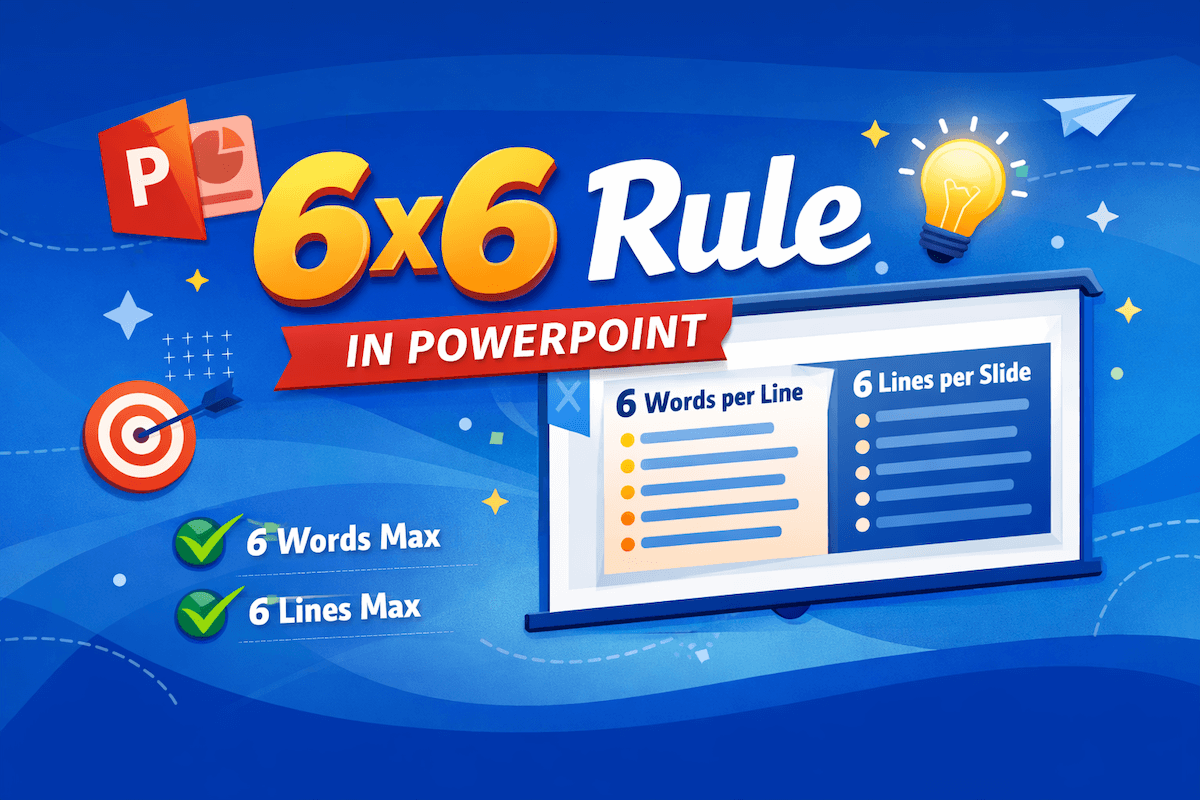
a). 5 Words in a Single Line
Have you observed how slides that are overloaded with long sentences and multiple paragraphs often seem quite dull? Instead, those with fewer words and structured sentences captivate us more.
Thus, the 5-5-5 rule suggests that there should be only five words in a single line. This helps avoid any unnecessary information and filler clauses. When your sentences are short, the audience can instantly understand and retain information. Therefore, pick your words wisely and purposefully, and avoid overexplaining anything.
b). 5 Lines On a Single Slide
The next rule suggests that we limit the number of lines per slide to only five. This gives space to the content and makes your deck look much more aesthetically pleasing. It also allows you to avoid heavy text boxes and lengthy columns.
When there are fewer sentences, the audience can easily follow what is next and comprehend each idea properly, without getting overwhelmed or overstimulated. As a result, your presentation becomes more interactive and engaging.
c). Maximum of 5 Structured Slides
Utilizing your time efficiently is extremely crucial during presentations, and the best way to do so is by keeping your structured slides to a maximum of five. This means avoiding dragging your audience through dozens of slides that hold no value. Instead, encapsulate your story into five crisp and sharp slides that instantly showcase the problem, solution, and deliver the core message. If you wish, add other slides with visuals and graphics in between to make the presentation more engaging.
Why is the 5-5-5 Rule Effective?
1. Reduces Cognitive Load
We live in an era of information overload – be it AI agents, web browsers, or social media, each platform has tons of data for us. This often leads to excessive mental burden in most people. Thus, in such an environment, less is more – when your slides are perfectly structured, contain only the crucial information, and talk to the audience directly, their cognitive load reduces drastically, and the ability to understand is enhanced.
2. Anchors Audience Attention
Have you ever had to sit through a presentation where the slides never seemed to end? If yes, you would have lost interest and most probably either left or started using your phone. Thus, when the slides are limited and hit exactly the bull’s eye, you know that the presenter means business and immediately find your attention anchored. If you too want to glue your audience to what you are saying, curate your deck around this principle.
3. Improves Communication
When it comes to great communication, it is not about how much you say, but how well you can deliver your message with fewer words. This allows your communication to remain clear and well-articulated. It also helps the audience retain information for much longer, making your presentation more effective at recall.
4. Puts the Limelight on the Presenter
Most presentations focus more on the slides and less on the one who is delivering the presentation. However, with the 5-5-5 framework, the limelight is always on the presenter. This allows them to engage more with the audience, interact with them, and even build a personal brand that can be leveraged later.
Who Should Use the 5-5-5 Framework: Use Cases
(i). Investor Pitches
The 5-5-5 presentations are usually sharp, to the point, and direct, and are exactly what investors are usually looking for. They consume less time and allow the founders to explain their business without overcomplicating or exaggerating. Further, this framework also pushes business owners to eliminate any noise or fillers from their decks, making every statement count.
(ii). Educational Presentations
When it comes to education, teachers, educators, and trainers often struggle to capture the students’ attention. This framework allows them to shorten their learning material into compact and digestible slides that allow structured learning. It also ensures that students do not get lost in long blocks of content and can instantly find what is important.
(iii). Executive Briefing
Senior leaders and management value time, precision, and clarity, and are usually packed with back-to-back commitments. Thus, the 5-5-5 framework is ideal for executive briefing – it allows you to communicate the details in a very short and impactful manner. You can easily brief them about projects, team onboarding, new clientele, etc., with just a few slides.
(iv). Branding & Marketing
In today’s world, branding and marketing thrive on short-form content, as nobody takes the effort to read long paragraphs and detailed case studies. Therefore, this framework is ideal for convincing your audience to make a purchase, create brand recall, or simply raise awareness for your products and services. You can even experiment with the language and graphics here to make your deck more punchy, witty, and persuasive.
(v). Corporate Presentations
Most corporate presentations are long, tedious, and extremely draining. They usually require another round of conclusion and takeaways even after the presentation has ended. Thus, the 5-5-5 framework eliminates this hassle – it enforces visual discipline and narrative clarity. Shorter sentences ensure that each team member understands the matter, and limited slides allow better recall.
How to Use the 5-5-5 Framework
1. Identify the Core Message of Your Presentation
Before you jump into crafting the slides, identify the core message. Think of it as an objective – what do you wish to achieve by the end of the presentation? Do you want the audience to take an action, buy a product, or simply even sign up for a cause? Once you pinpoint this, curate your key message by further dissecting the agenda.
For example, if you want your audience to invest in your business, your key message would include why they should invest and what their returns would look like. Keep this as the anchoring point for your entire presentation.
2. Use Simple and Easy Language
Clarity is power – you want your viewers to gather what you are saying, and not get ambiguous. Therefore, always focus on using simple and easy-to-understand language. Refrain from using jargon, longer words, or even complex phrases or idioms. Curate your content in layman’s language, and you will see how each and every person in the room remembers and retains your words.
3. Focus on Visuals and Charts
Incorporate visuals such as images, graphics, and videos to make your slides look more alive. You can also add charts and graphs to represent data and statistics in a much more compelling manner. If your slides talk about projects or journeys, you must include creatives like roadmaps, timelines, funnels, etc. These will not only make the presentation more engaging but also help represent data flawlessly. You can use professional PowerPoint templates and customize them according to your needs to make the deck even more captivating.
4. Revise and Eliminate Unnecessary Elements
After you are done making your slides, take some time to go through each slide and eliminate all unnecessary elements. These can be texts, images, bullet points, graphics, or any other detail that you feel is not required. Keep your approach minimal and focus on removing anything that does not fit.
Conclusion
The 5-5-5 framework is excellent for those who are under a time crunch and need to deliver concise and crucial information. While this framework works extremely well for almost all sectors, it may not be an ideal fit for presentations that demand detailed investigations. Therefore, if you wish to deliver your ideas quickly and with a bird’s eye view, this framework is your best pick. In an era of overinformation, this framework will help you stand out and make an impact!