Do you know that there are about 10 million non-governmental organizations (NGOs) in the world, yet when you recall one, you always remember the top three or four? Such organizations are often the ones that establish a strong emotional connection with you – whether through their stories, newsletters, or on-ground reports. This is because their presentation skills are much better than others; they convey their work through emotions, solutions, and high-quality visuals. In this article, we will delve deep into the nuances of a great non-profit presentation and how you can craft one too.
What is a Non-Profit Presentation?
One of the most crucial things that helps a non-profit move forward is not just the purpose or the drive, but the ability to communicate the same effectively and efficiently. Thus, a non-profit presentation helps fulfil that – it conveys various ways in which the organization makes an impact, transforms data into stories, etc. This deck usually includes the problem, solution, transformation anecdotes, funding requirements, and more. The core purpose of these decks is to build credibility, establish trust, and inspire people to take some form of action towards a bigger cause.
Uses of a Non-Profit Presentation
(i). Fundraising
Fundraising is one of the core pillars of a non-profit organization, and hence requires a strategic yet unique presentation that helps donors see the real story. It showcases the challenges your organization faces and how the donor’s money will be used to overcome them.
Thus, instead of simply asking for money, use the presentation to emotionally wire your audience – connect them to the real faces behind your purpose. For example, if you wish to raise funds for education in rural areas, incorporate images of little children who work in factories or look after each other due to no access to learning facilities. Highlight the numbers, and talk about the quality of their lives with and without your initiatives.
This will help build genuine trust and allow the audience to feel their pain. It will also enable you to position the donors as partners in making the world a better place, instead of simply being financial providers. Such a sense of involvement and purpose will drive them towards a greater willingness to donate.
Therefore, with properly crafted presentations, fundraising can become a piece of cake for founders.
(ii). Awareness Campaigns
There are innumerable issues in the world that remain unnoticed due to a lack of knowledge, negligence, and because most times, we turn a blind eye to what does not matter to us. This is where non-profit organizations play a tremendous role – they highlight problems and raise awareness towards them with their presentations, in digestible formats.
Further, they also help debunk myths, show facts, and emphasize the real picture, as awareness is not just about spreading new data, but also about educating people with the correct information.
For awareness-driven presentations, always mention the source of your information or add pictures or videos to make your claims seem more trustworthy. You can include case studies and even government reports, if any. Use high-quality visuals supported with data to make your case even stronger.
(iii). Volunteering Engagement
Non-profit organizations require skilled and passionate volunteers who can work and help bring about a change. In today’s money-driven world, it is extremely difficult to find those who can truly dedicate themselves to the cause. Thus, presentations are an excellent way to bridge the gap.
You can use captivating slides to highlight a volunteer’s role – show them how their efforts can help transform lives. Right from the onboarding to the hands-on work, throw light on how each step can truly elevate somebody’s quality of life and enable them towards a better future. This will help establish a sense of purpose. Further, showcase the like skills that the volunteers would learn – people handling, crisis management, inter-personal skills, and much more. Communicate how these can help them grow in their business or corporation.
Besides everything else, a volunteer-focused presentation allows you to build a sense of community and belonging. It makes people feel that they are a part of something bigger, where their actions are meaningful.
(iv). Overview of the Impact
Sharing the impact and progress of your organization is as important as everything else. Such presentations allow you to highlight key achievements, major breakthroughs, and even the smaller victories. They add on more layers of trust and credibility to your non-profit. Therefore, incorporate tonnes of pictures, videos, and testimonies of how your work impacted lives. Include transformation graphics such as before and after series, use roadmaps and timelines, and incorporate graphs to show tangible results.
For example, if you are including data saying that your work helped twenty students get admission into a formal schooling structure, add an annexure or an embedded link highlighting the students’ names, areas, and schools into which they have been admitted. While not everybody will open the link, it will immensely enhance their trust.
Tips to Create an Impactful Non-Profit Presentation
1. Create a Strong Opening
The first few seconds play a critical role in forming a positive or negative impression. Thus, always commence with a strong opening. Use mind-blowing facts or start with numerical data – these cues will help anchor your audience’s attention.
For instance, if you are presenting to raise funds for a water project in India, begin with a numerical fact, such as, “Do you know that water-borne diseases cost India around 600 million US dollars per year? Now imagine what would happen if the same amount is dedicated towards solving the problem.”
By owning a strong opening, you set the stage for the rest of the presentation and create an excellent impression. This helps convince people faster and better.
2. Anchor with a Story
Human beings are wired to respond to stories. Therefore, glue your audience with a powerful narrative. This can be a story from the field, a testimony, or even an impactful anecdote. Try to build tension, create suspense, and compose your story around emotions.
Let us understand with an example. Consider you are narrating a story of a family who earlier had no access to water and your project helped them get clean supply. Instead of mentioning this in a line or two, start by describing the poor living conditions, highlight the diseases and losses in their family due to contamination, mention how it affected their wellbeing, and then give away the final verdict, that your organization provided the solution.
Such narrative archs allow you to attract more people towards the message.
3. Define Your Purpose
Non-profit presentations require a clear purpose, which should be mentioned before jumping on to the slides. Define what you wish to achieve from the slides – whether it is to attract donors, build a community, seek volunteers, etc. By clearly mentioning your goal, you allow the audience to align their thoughts and expectations with yours.
4. Use a Timeline
Timelines are the best way to show your organization’s movements. Whether it is for a project, a research, or even a depiction of how far you have come, timelines add charm to your slides. They provide a bird’s eye view of your journey and allow viewers to grasp multiple years of records at a glance. You can even use other graphic elements such as roadmaps to showcase the same.
5. Highlight Work with Numbers
Describing your impact through words is good, but using numbers to convey the same is what will get you ahead. Talk about statistics – how you started with one person and have now impacted an entire community of ten thousand people, or so on.
For instance, use typography on your slides to highlight numbers – write data such as percentage in bold and large fonts. This will instantly catch the audience’s attention and allow you to communicate more seamlessly.
6. Incorporate High-Quality Visuals
Visuals are one of the greatest assets for presenters. Be it videos, photos, or even short clips, these can add up to create a much larger impact on the viewers. Therefore, collect high-quality visuals from your sites, projects, and communities. Take as many before and after videos as you can, and compile them into a short film. Ensure that your visuals are in the supported format and embedded properly onto the slides.
7. Define Your Problem and the Ask
A powerful non-profit presentation defines the problem. It talks about what is the crisis, who does it affect, what are the causes, and why does it matter. It clearly paints a picture of the issue and points exactly at what is needed, which is the ask. This can be anything – funding requirements, government clearance, hiring needs, etc. By defining what you want, you can turn the audience’s attention into action.
8. Present Your Solution and Impact
Once you have presented the problem and the ask, bring out your potential solution as the turning point. Highlight why you need what you have asked for, how would you utilize those resources, and what difference would they make. Talk about numbers in your solution and back them with the intangible impact. When people see a plan for change, they are more likely to provide you with what you want.
9. Call to Action and Next Steps
Call to action is a very essential element in your presentation. It guides the viewers towards the next steps – whether they need to register for a volunteering activity, scan a QR to make donations, or simply to fill a form. When the CTA is clear and actionable, it increases the conversion rate as well.
You can also include your details such as company name, email address, and contact number for the audience to reach you out on.
10. Use Case Studies
Not including case studies in your non-profit presentation is the biggest mistake you can ever make. Thus, always incorporate your best cases and use them tactfully to communicate your efforts. Use charts, bar graphs, and other graphics to break the entire case study into small and understandable pieces, so that your viewers can know what actually matters and do not have to look through the entire data for meaningful information.
11. Keep Your Presentation Simple
When it comes to presentations for non-profit, simplicity is the key to winning. Avoid cluttering your slides with excess sentences or visuals, refrain from using too many fonts or colours, and stick to the template for the entire deck.
Your main aim should be to convey your content in the best way possible. Therefore, keep your slides neat, minimal, and tidy. If you wish to deliver more information, try handing out materials or attach resources that can be read later by the audience.
12. Avoid Jargon and Technical Language
Your donors and volunteers want to see your work in the simplest and easiest language possible – they do not care about technical terms or overcomplicated jargon. Thus, avoid using terms that are too difficult to comprehend. Instead, focus on making your deck more inclusive and simple.
After applying these tips to strengthen your messaging and design, the next step is choosing the right presentation layout. To help you put everything together quickly and professionally, here are some non-profit presentation templates you can use. Each one is fully customizable and thoughtfully designed to highlight mission, impact, financials, and fundraising goals – making it easier to tell your story with clarity and confidence.
a). Non-Profit Organization Pitch Deck
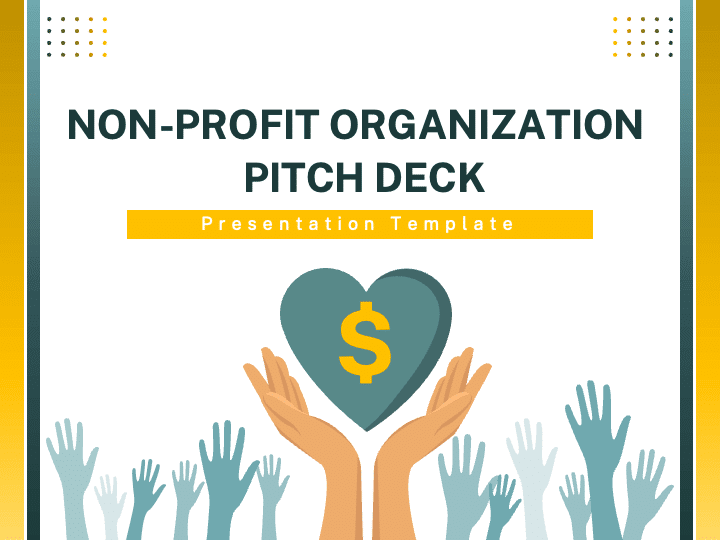
This template offers a complete structure to present your organization’s mission, programs, impact, and future goals. It includes clean visuals, infographics, and charts that make complex information easy to follow. Ideal for donor pitches, stakeholder meetings, and organizational overviews.
b). Charity Fundraising Presentation Theme
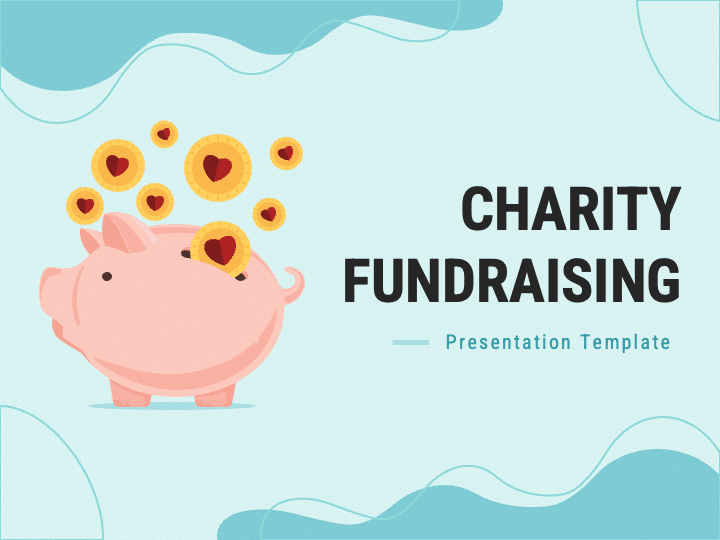
Designed specifically for fundraising campaigns, this template helps you showcase goals, beneficiaries, impact stories, and fund allocation clearly. Its engaging visuals and storytelling-focused layouts help build emotional connection and donor confidence. Perfect for charity events, campaigns, and outreach sessions.
c). Fundraising Plan Presentation
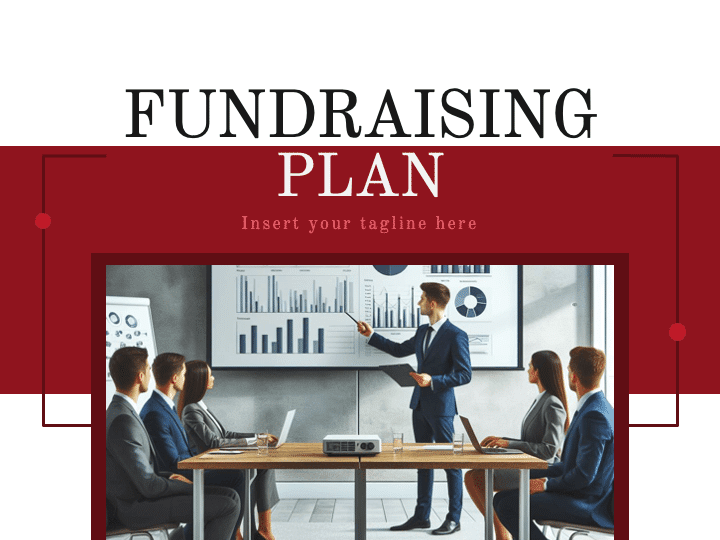
This deck provides a structured way to present your fundraising strategy, target audience, objectives, and financial needs. With timelines, charts, and planning frameworks, it helps audiences understand the strategy end-to-end. Ideal for internal planning or formal fundraising proposals.
d). Non-Profit Marketing Template
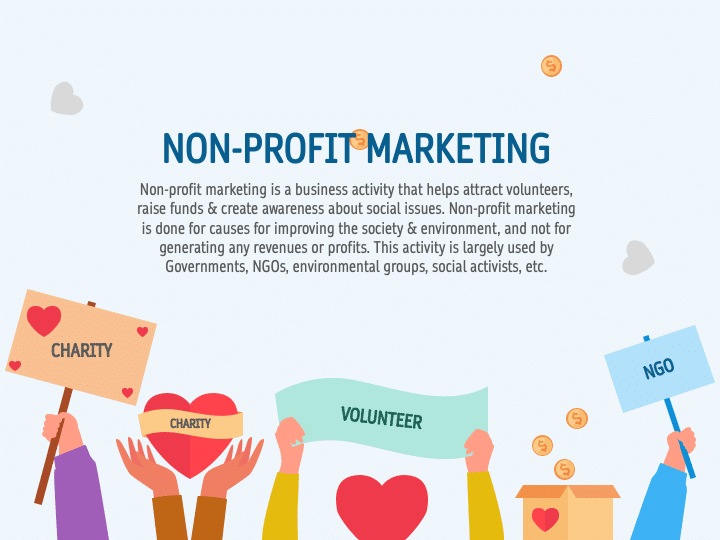
Use this template to present your organization’s marketing initiatives, outreach plans, and audience engagement strategies. It includes slides for mission messaging, target segmentation, promotional tactics, and branding elements. Great for planning awareness campaigns and volunteer/donor engagement.
e). Non-Profit Marketing Plan Presentation
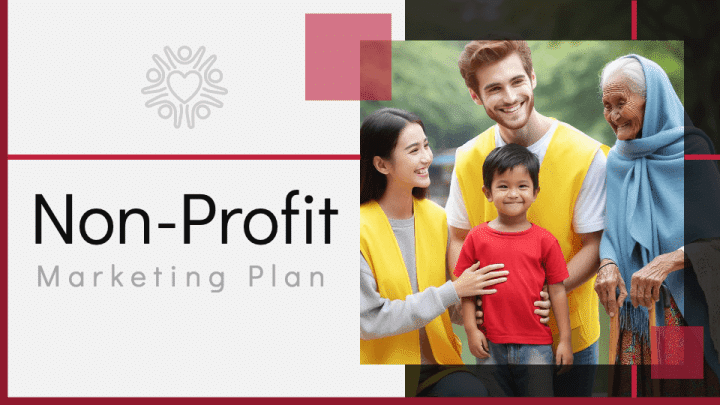
This template helps outline a comprehensive marketing roadmap, including goals, audience insights, promotional channels, KPIs, and budgets. Its clean infographics and structured layouts make strategy discussions more effective. Ideal for team planning, board updates, or campaign approvals.
f). Nonprofit Accounting Presentation
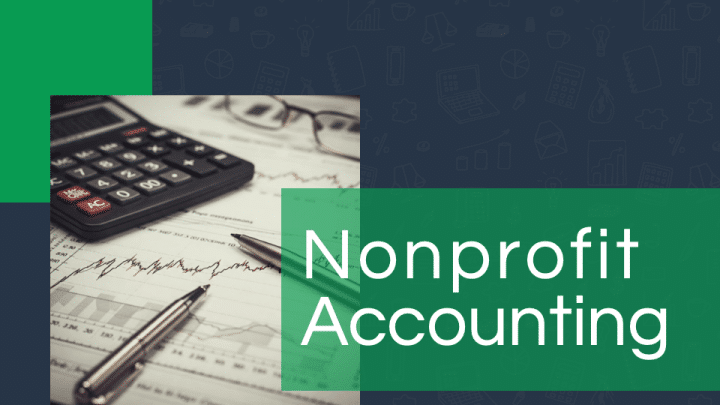
This deck is designed to communicate financial transparency with clarity, covering statements, revenue streams, expenses, and compliance details. It features simple charts and diagrams that make financial data easy to understand. Perfect for board reviews, audits, and donor reporting.
FAQs
1. What should be included in a non-profit presentation?
A clear mission statement, data-driven impact stories, donor outcomes, financial transparency, program highlights, and a compelling call-to-action.
2. How do I make my non-profit presentation engaging?
Use storytelling, visuals, real beneficiary quotes, infographics, and concise messaging to keep your audience emotionally connected and focused.
3. What is the best structure for a non-profit presentation?
Start with the problem, present your mission, show impact, provide data, share success stories, outline future goals, and end with a strong ask.
4. Which tools can I use to create a non-profit presentation?
PowerPoint, Google Slides, Keynote, Canva, and AI presentation makers are commonly used for quick, professional results.
5. How long should a non-profit presentation be?
Ideally 10–15 minutes, or 10–12 slides. Adjust length depending on whether you’re speaking to donors, volunteers, or community partners.
6. How can I showcase impact effectively in the presentation?
Use before-and-after visuals, metrics, case studies, charts, and beneficiary testimonials to provide clear evidence of your results.
7. What type of visuals work best for non-profit presentations?
Impact photos, infographics, charts, timelines, maps, and icons that support your message and highlight your organization’s achievements.
8. How can I tailor a non-profit presentation for donors?
Focus on ROI for donors: measurable results, stories, operational transparency, and how contributions directly fuel impact.
9. Can I reuse the same presentation for different audiences?
Yes, but you should adjust messaging, tone, visuals, and the call-to-action for donors, volunteers, stakeholders, or board members.
10. How should I end a non-profit presentation?
With a clear, compelling call-to-action – donate, volunteer, partner, or support specific initiatives.